Cheney over the years

Site History

For nearly a century, this land has reflected the changing story of Summerhill—from city dump, to neighborhood greenspace, to segregated stadium, Olympic training site, and community track. Today, its future is once again being debated.

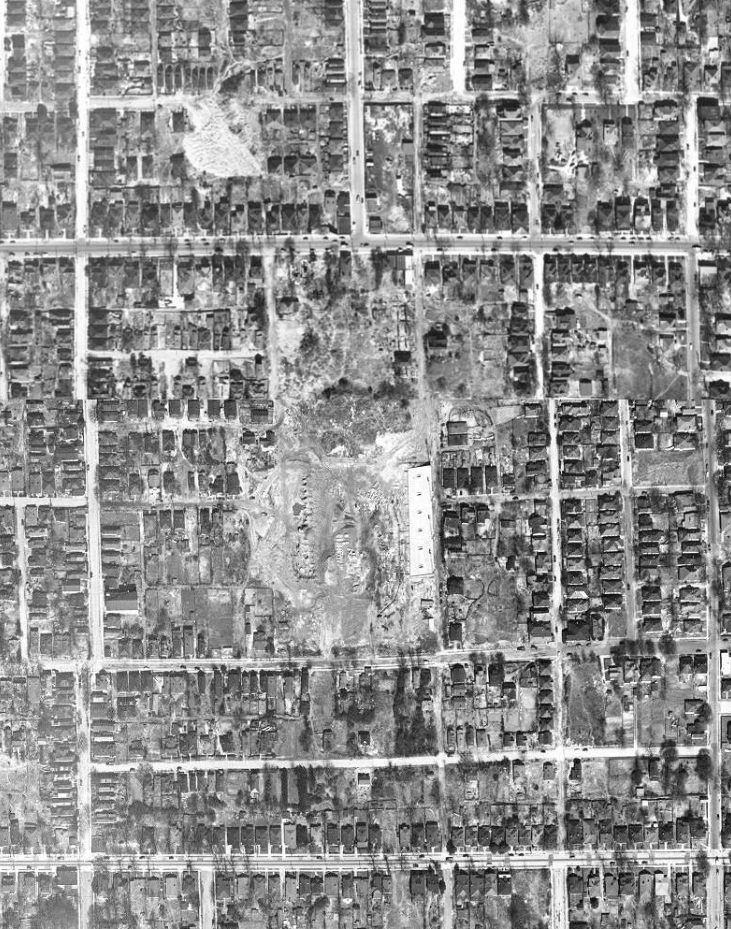
Historic aerial view of the land around Cheney Stadium

Pre-1947

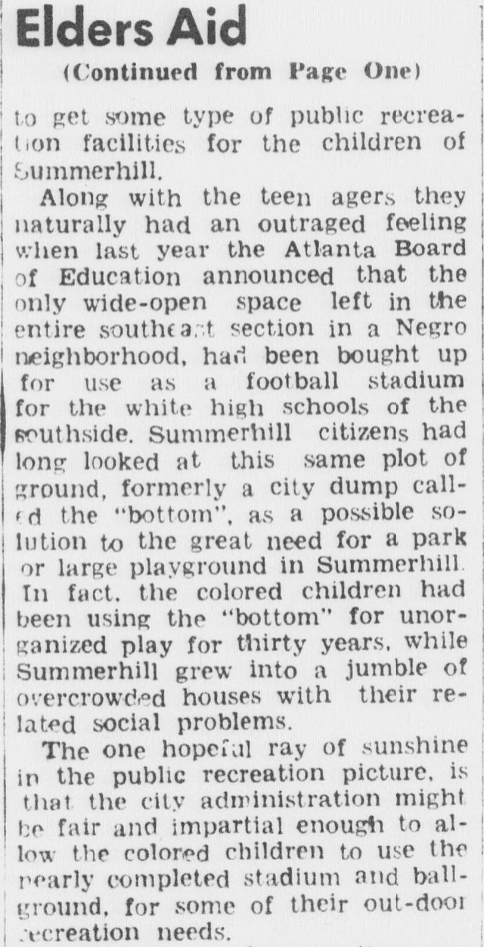
This part of Summerhill sits at one of the neighborhood’s lowest points. Intrenchment Creek once flowed through the area before being routed underground into the city’s sewer system. Until about 1920, the land was used as a city dump. After the dump closed, it became open greenspace, where neighborhood children played and residents hoped the city would eventually create a public park or playground.
Whites Only Stadium

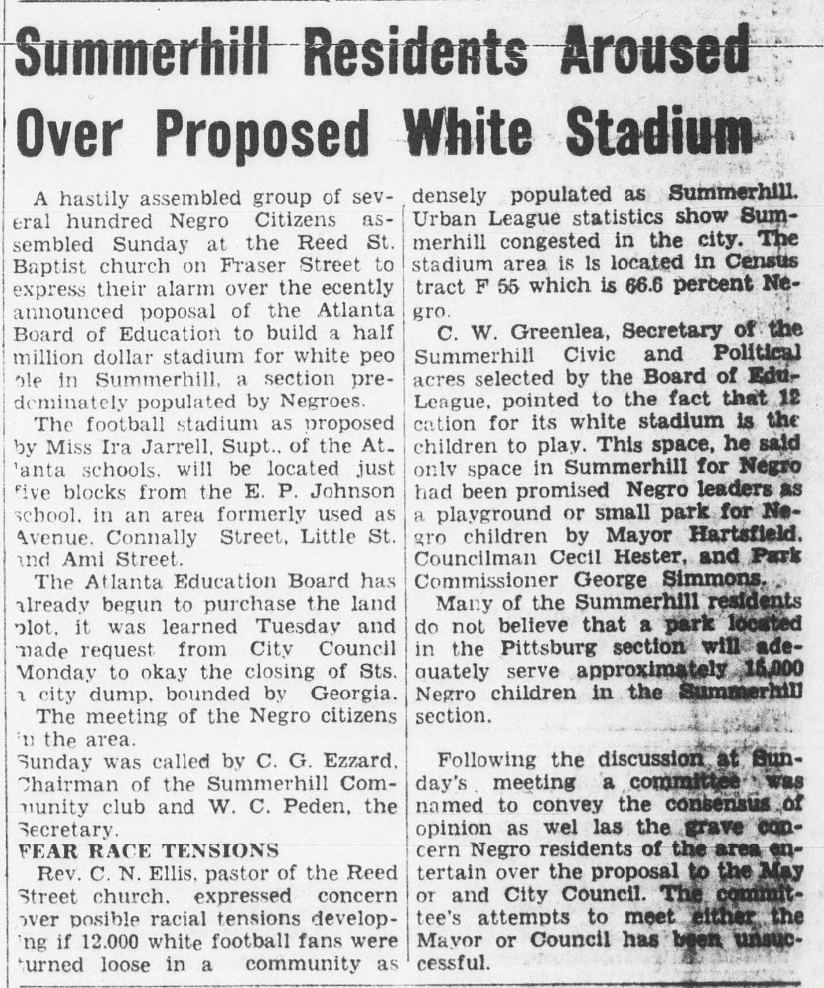
Despite local opposition, the Atlanta Board of Education acquired the property in 1947 and built a whites-only football stadium serving high schools on the city’s south side. At the time, Atlanta had 22 playgrounds for white children but only three for Black children.

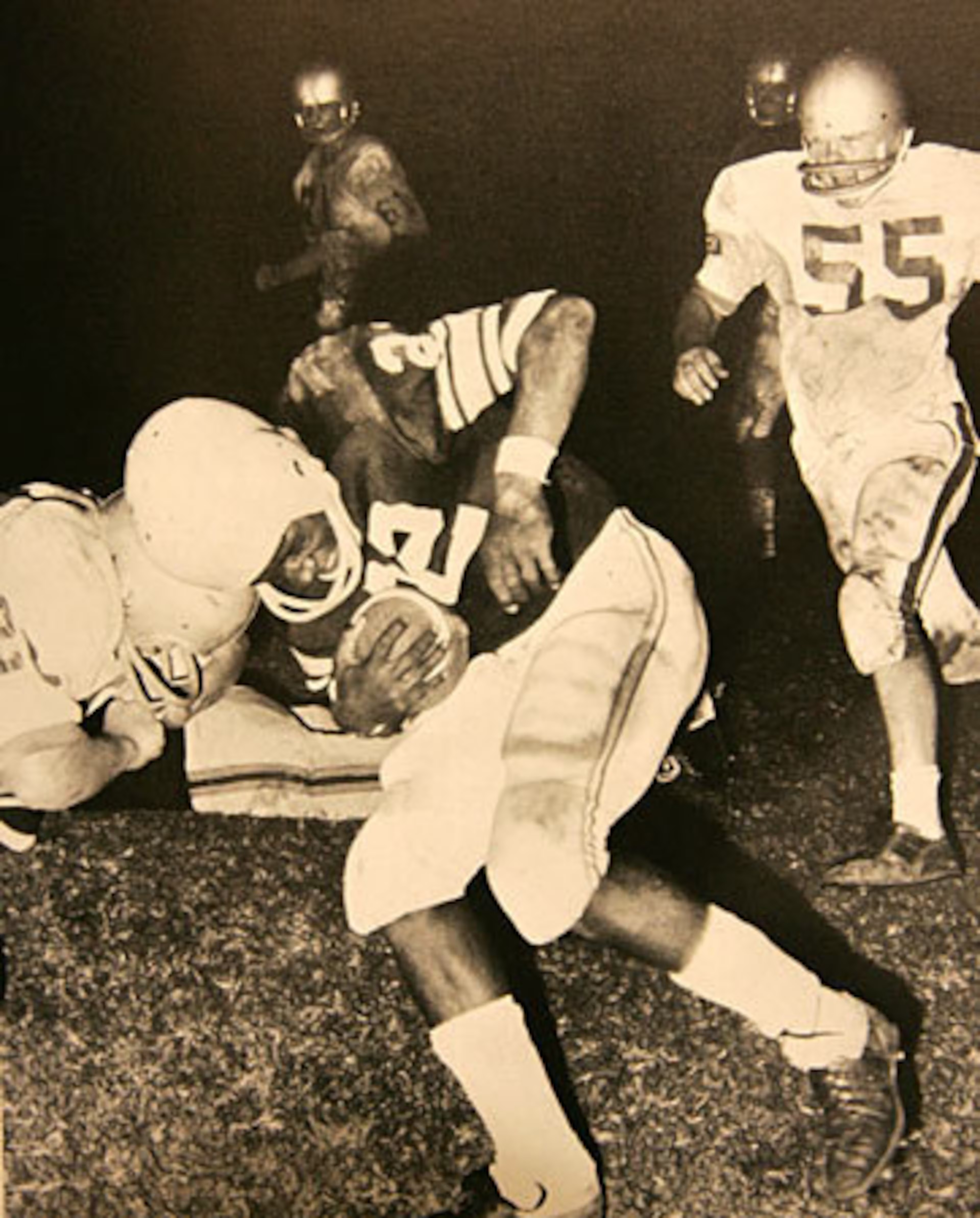
Historic football game at Cheney Stadium

Desegregation

Along with the rest of Atlanta Public Schools, Cheney Stadium was desegregated in the early 1960s. Black high schools were first permitted to use the stadium, followed by interracial games. The decades that followed marked Cheney’s most prominent era, with the stadium hosting NFL preseason games, college track meets, major high school football games, and city championships.

Decline and Rebirth

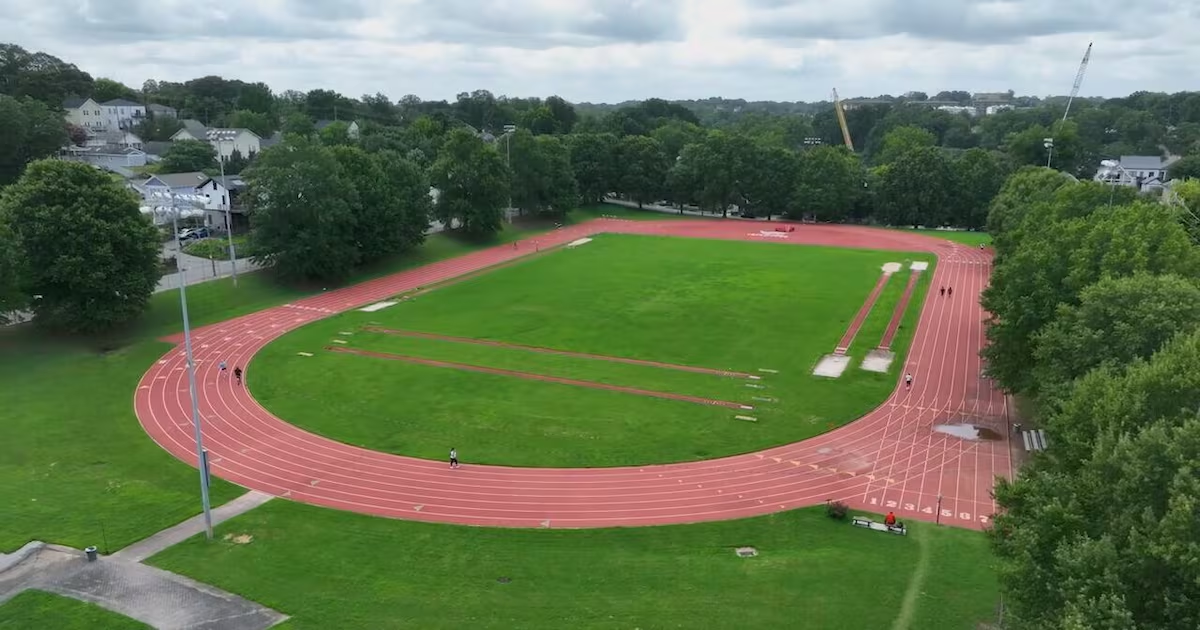
As Summerhill’s population declined and more schools built their own stadiums, use of Cheney Stadium gradually fell. By the early 1990s, the stadium had become obsolete and was demolished. The site was later used as a warm-up track for the 1996 Olympic Games. Refurbished in 2017, it continues to serve as a community track today.

Aerial view of the outdoor track at Cheney Field today

The Site Today

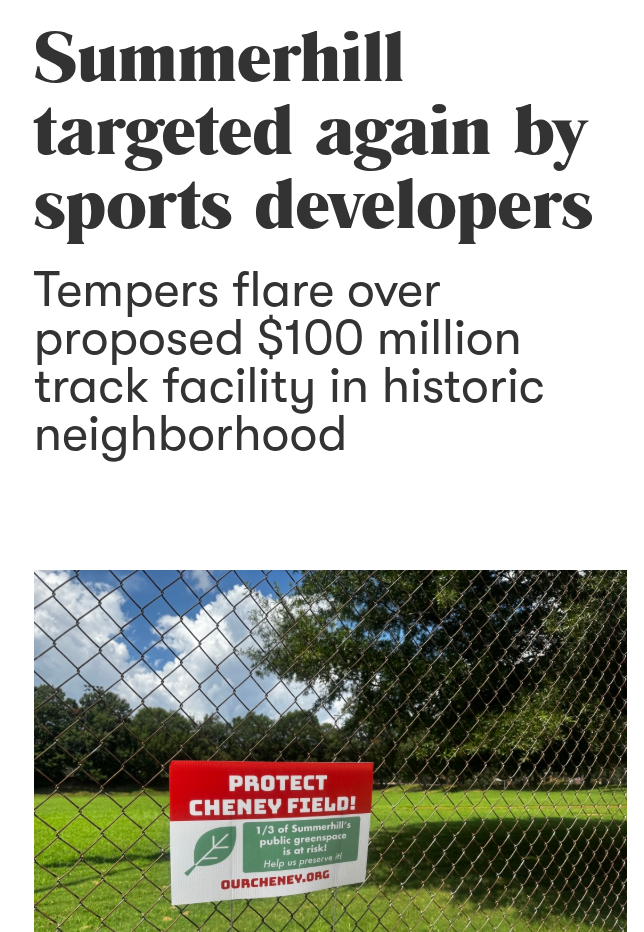
Nearly 80 years later, the neighborhood again faces a familiar question: whether greenspace used by local children and residents for recreation should be replaced by a major sports facility. Today’s residents are, in many ways, carrying forward the same argument made by their predecessors in 1947: that this land should serve the neighborhood around it.